
Still Sobel-Schwartz

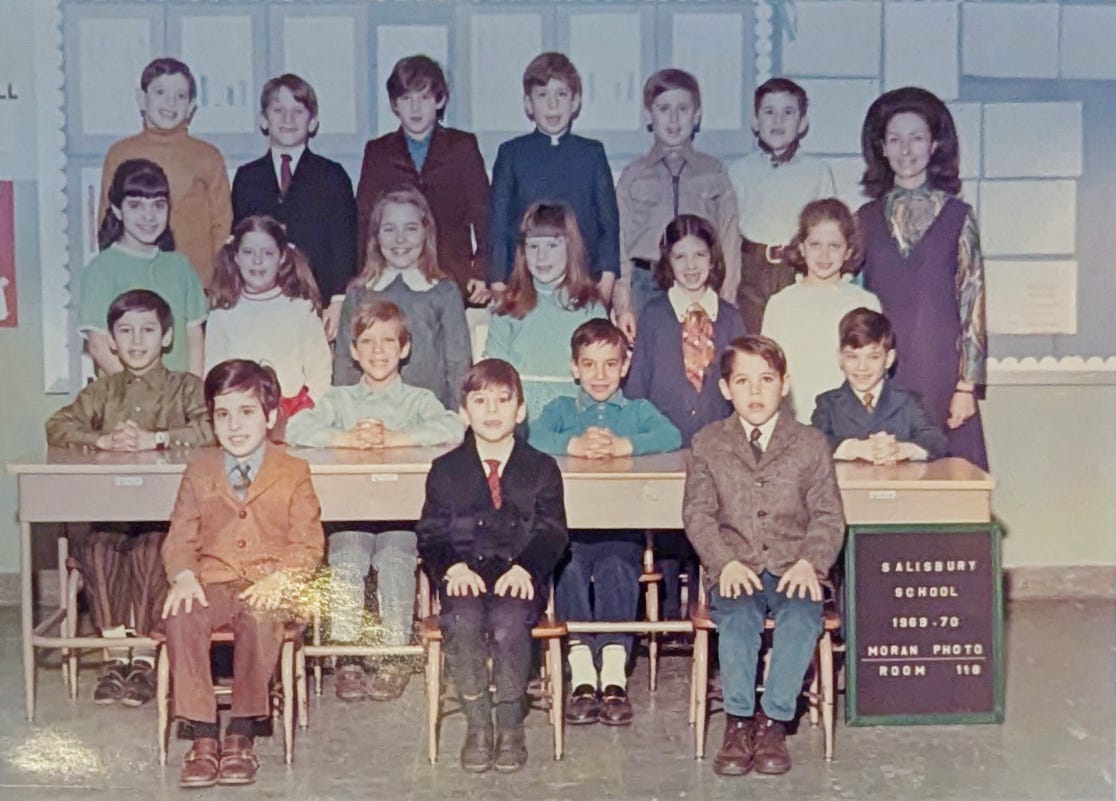
Ricky, as he went by in those days, and I met in Mrs. Orson’s 2nd-grade class in the fall of 1969. We lived in an idyllic small Long Island community, and each grade had only two or three classes, and he and I had yet to cross paths. We both adored Mrs. Orson and volunteered to stay late to wash the chalkboard with the filthy and raunchy-smelling sponge and bucket of water that most baby boomers remember well. As he later wrote when he signed my high school yearbook, “it was more of an excuse for us to be together and get to know each other than to help her.”
Rick was the youngest of four boys, and I was the last of three sons. For both of us, the closest older sibling was six years ahead in school, so we both had a remarkable amount of freedom for kids in elementary school, as our parents were “over” some of the mundanities of child-rearing by that point.
When we were eight or nine, we would lie down on a ledge in his closet, pull a blanket over ourselves, and talk for hours. I’ve no idea what we talked about, but I do recall both of us being fully enthralled in these conversations and looking forward to them. One time, his brother walked in on us and made some comment that I’m sure would be construed as homophobic by today’s standards, but we didn’t let that deter us.
In elementary school, we organized Friday pickup “kill the guy with the ball” and football games. We would meet at the school playground, and I’ll never forget those cool fall afternoons when we ran around endlessly without a thought beyond the next play. The game ended when it was too dark for us to see each other. We were two of the better players, so we had to play on different teams, but our rivalry made us both better.
Rick has been my co-conspirator in many of my prior posts. As much as we had in common, we had many differences. He was more soft-spoken, passive, and more artistic, while I was more outspoken, assertive, and left-brained. I would often bring extra #2 pencils in case he forgot them, and I often called him the night before important tests or deadlines to remind him. He was my confidant, someone who validated me and my experiences. As the youngest in my family, I often felt unseen and unheard. Rick “got” me. I want to think he felt the same way.
In 10th grade, Rick had a very part-time gig on Saturdays at his uncle’s small grocery/convenience store. As a great storyteller, he couldn’t wait to tell me that while buffing the floor in his uncle’s store, he accidentally bumped shelving adjacent to a gallon jug of apple cider. As he described it, he watched helplessly as the jug wobbled a few times before it finally crashed and broke on the ground. He concluded the tale with, “You have no idea how much a gallon of apple cider is until it spreads out all over a floor and you have to clean it up.” This incident did not lead directly to his firing a few weeks later, but a pattern of sporadic absences from his weekly four-hour shift did. The last straw was Rick’s failure to notify his uncle when Rick went on a Saturday ski trip.
Because both of his parents worked, he didn’t want to burden them. We were both on our high school bowling team, and most of the kids on our and competing teams had personalized equipment. While I made do with my father’s hand-me-down ball and shoes, he took this to the next level by using an alley ball, which he had to hide between practices and “steal” for our away matches. Rick still bowled competitively despite using scavenged equipment. One time, after I missed a 7-pin spare, I told him about the voice in my head. It was a repeating, gradual crescendo of, “I’m going to chuck it in the gutter, I’m going to chuck it in the gutter.” Much to my delight, he responded by saying, “Me too!”
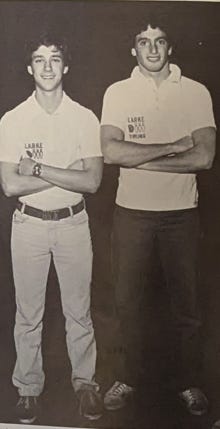
We played on the baseball team through high school and were often referred to by our teammates as “Sobel-Schwartz” because we always seemed to be together. In one game, while batting with a runner on third, the coach signaled a suicide squeeze by walking away from Rick within the third base coach’s box, with both of his hands in his back pocket. Rick missed the sign. The runner was tagged out at home. The coach exploded. In another baseball incident, on our way to an away game, our bus driver couldn’t find the field. I took the lead in helping, slid down the bus window, and asked two students, “Where is the playing field?” as if I was looking for a polo field.
Another contrast was my congenital hearing loss and Rick’s nearsightedness. When he went to the NY DMV (Department of Motor Vehicles), I suggested he try to take the vision test without his glasses. When I asked him how it went, he said, “The woman had to point out to me where the vision chart was.” Rick’s revenge came when I told him about a date that ended with a conversation on the girl’s front stoop. She talked most of those twenty minutes, whispering, to avoid disturbing her parents. I didn’t dare tell her I couldn’t hear most of what she said.
In our senior year, our AP Biology teacher, Mr. Unger, gave us a year-long project of more than 50 different biological subject drawings. He clearly stated that we would not be judged or evaluated on our artistic talent, just for completing the assignment. I, being completely void of any artistic talent and overly pragmatic, handed in the worst sketch book ever, which Rick later described as “pure chutzpah,” before the deadline. He, the ever-precise artist, turned in his assignment one day late, and Mr. Unger only accepted it after Rick pleaded with him. This was one of the few times he resented me. Mr. Unger also taught driver education and had exceptionally long arms, which led to one of our favorite recurring bits: imagining him teaching students how to drive from the back seat.
As he was starting his Junior year at Cornell, I visited him and asked, “Why do you have two clocks by your bed?” I marveled at his unique combination of ingenuity and laziness when he explained that, “The alarm on this clock stopped going off, and the alarm on the other clock only goes off if it is face down.” To this day, I wonder, “How did he figure this out?”
I loved hearing how he and his college roommates outwitted their university slumlord. The winter temperatures in Ithaca could get extremely cold, and since the heat was included in the rent, their landlord placed a plexiglass lock on the thermostat. Rick figured out that by placing a Ziploc bag filled with ice on top of the plexiglass sensor, they could run the heater as long and as high as they wanted. They were the only students in town wearing shorts and t-shirts in their apartment all winter long.
After college, while pursuing his master’s degree in architecture, I was starting my professional career. I extended a business trip to visit him over the weekend. It was Saturday night, and we felt obliged to go out, even though we both would’ve been happier at home. We didn’t have a car, but his roommate’s friend did, and because it was a stick shift, I ended up driving a car owned by someone I’d never met. Luckily, we’d already agreed I’d be the designated driver, which added one more limit to how wild the night could get.
The bar we went to was a hangout for the University of Maryland football team. Rick went out on the dance floor without me. All of a sudden, the crowd parted like the Red Sea parted when the Jews fled Egypt, watching Rick and an inebriated member of the football team, forehead to forehead. As Rick later explained, the linebacker pointed at me and claimed that I had “looked at him funny.” He found my sneer offensive enough that he was willing to fight someone who was four inches shorter and 50 pounds lighter to defend his honor. My smaller friend was inherently tougher than I was and more willing to stand his ground than I would have been. After Rick safely extracted himself from the encounter, he grabbed me and said, “We’ve got to get out of here now.”
The years have flown by, and Rick continues his career as an accomplished museum exhibition designer. His past projects include the Clinton and Obama Presidential Libraries, the Washington D.C. Holocaust Memorial, and the Lithuanian Lost Shtetl Museums. I’m retired from my career in management and technology consulting. My children are both adults now. He married later than our other high school friends and had four children. Two of them are still in high school. He lives in New Jersey, and I try to see him and his wife whenever I head north to visit friends and family. Although we don’t speak regularly, my memories endure.
Who was your confidant in elementary school?
What are the favorite stories that you share with him or her?
Sometimes those lifelong bonds are stronger than DNA family bonds. I am envious because my family was military and being shy, by the time I met a close friend one of our fathers was transferred.